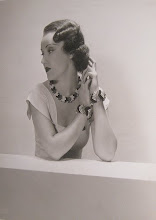
German postcard by Krüger, nr. 900/300. Photo: Georg Michalke.
In the late 1950’s blonde, German Elke Sommer (1940) was a European sex symbol before conquering Hollywood in the early 1960’s. With her trademark pouty lips, high cheek bones and sky-high bouffant hair-dos, Sommer made 99 film and television appearances between 1959 and 2005. The gorgeous film star was also one of the most popular pin-up girls of the sixties, and posed twice for Playboy.
Elke Sommer was born Elke Schletz in 1940 in Berlin to a Lutheran Minister and his wife. The family was forced to evacuate in 1942 to Erlangen, a small university town in the southern region of Germany. Her father's death in 1955 when she was only 14 interrupted her education. In 1957 she worked as an au-pair girl in Chigwell and Hampstead, two expensive residential areas of London. She entertained plans to become a diplomatic translator for the United Nations, but instead decided to try modeling. After winning the title Miss Viareggio Turistica in 1958 while on vacation in Italy with her mother, she caught the attention of renowned film actor/director Vittorio De Sica and began performing on screen. Her debut film was in the Italian feature Uomini e nobiluomini/Men and Noblemen (1959, Giorgio Bianchi), which starred De Sica. Following a few more Italian pictures, which included her first starring role in Femmine di lusso/Love, the Italian Way (1960, Giorgio Bianchi) with Ugo Tognazzi. Within two years Elke made five films in Italy and also two in Germany, the adventure Das Totenschiff/Ship of the Dead (1959, Georg Tressler) with Horst Buchholz, and the interesting noir crime drama Am Tag, als der Regen kam/ The Day It Rained (1959. Gerd Oswald) starring Mario Adorf. She gradually upgraded her status to European sex symbol, and appeared in such films as the sexy Zarte Haut in schwarzer Seide/Daniella by Night (1961, Max Pécas), Douce violence/Sweet Ecstasy (1962, Max Pécas), the drama Das Mädchen und der Staatsanwalt/The Girl and the Prosecutor (1962, Jürgen Goslar) and her first English-speaking picture Don't Bother to Knock (1961, Cyril Frankel) with Richard Todd. Most of the publicity photographs for the latter production showed her in a bikini, and revealed that although she was nothing like as buxom as Sophia Loren, Elke had a flat stomach and superb legs.
Elke Sommer moved to Hollywood in the early 1960’s to try and tap into the foreign-born market. Her sexy innocence made a vivid impression in the all-star, war-themed drama The Victors (1963, Carl Foreman). She received considerable publicity when it was reported that she filmed her scenes twice, with a sexier version made for the European market. Elke played a German girl who sexually gratifies her American boyfriend (George Hamilton) with the full knowledge of her parents because he brings chocolate to the family home. In 1964 she won the Golden Globe as Most Promising Female Newcomer for The Prize (1963, Mark Robson), an espionage thriller with Paul Newman. In the classic bumbling comedy A Shot in the Dark (1964, Blake Edwards), the second entry in the hilarious Pink Panther series, she proved a shady and sexy foil to Peter Sellers' Inspector Clouseau. A scene with Sellers and Elke in a nudist camp received enormous publicity, and the film was a huge hit. Besides becoming one of the top film stars of the mid-1960’s, she also was one of the most popular pin-up girls of the time. She posed for several pictorials in Playboy Magazine (September 1964, December 1967).
Elke Sommer was the leading lady opposite hunky sixties stars like James Garner, Robert Vaughn and Dean Martin in such Hollywood productions as the crime melodrama The Art of Love (1965, Norman Jewison), The Money Trap (1965, Burt Kennedy), The Oscar (1966, Russell Rouse), The Venetian Affair (1967, Jerry Thorpe), and the Matt Helm spy spoof The Wrecking Crew (1969, Phil Karlson). The blonde and beautiful Sommer proved irresistible to American audiences whether adorned in lace or leather, or donning lingerie or lederhosen. She continued to make films in Europe as well as America. In 1966 she returned to England to work on the Bulldog Drummond extravaganza Deadlier Than the Male (1967, Ralph Thomas), a film that has minor cult status, mainly because Richard Johnson gives a superb James Bond-like performance, but also because Elke and Silva Koscina were so eye-catching as two sexually-charged assassins. Always a diverting attraction in spy intrigue or breezy comedy, she was too often misused and setbacks began to occur when the quality of her films began to deteriorate. Her title role in the tasteless Cold War comedy The Wicked Dreams of Paula Schultz (1968, George Marshall) proved her undoing.
Elke Sommer benefitted from speaking seven languages fluently and her career took her to scores of different countries over time. In 1972, she starred in two low-budget Italian horror films directed by Mario Bava, which have both become cult classics: Gli orrori del castello di Norimberga/Baron Blood (1972) with Joseph Cotten and Lisa e il diavolo/Lisa and the Devil (1973) with Telly Savalas. The latter film, was later re-edited to make a very different film called House of Exorcism, an Exorcist rip-off. In 1975 Elke went back to Italy to appear in additional scenes inserted by the producer, against the wishes of the director. In those scenes a demonic Elke swears obscenities at her exorcist, and in typical Linda Blair style spits out pea soup and actually vomits live frogs and insects. In England she good-naturedly appeared in the ‘comedy’ films Percy (1971, Ralph Thomas) and its equally cheeky sequel Percy's Progress (1974, Ralph Thomas), which starred Hywel Bennett (later Leigh Lawson) as the first man to have a penis transplant. She also showed up in one of the later ‘Carry On’ farces entitled Carry on Behind (1975, Gerald Thomas) as the Russian Professor Anna Vrooshka. In Germany she appeared in Edgar Reitz’s Die Reise nach Wien/The Trip To Vienna (1973) with Hannelore Elsner, and in Wolfgang Petersen’s thriller Einer von uns beiden/One or the Other (1974) opposite Klaus Schwarzkopf and Jürgen Prochnow.
From the mid-1970’s Elke Sommer worked more and more for tv where she appeared as a guest star in popular series as The Six Million Dollar Man (1976), Fantasy Island (1981) and The Love Boat (1981, 1984). She played in the mini-series Inside the Third Reich (1982, Marvin J. Chomsky), Jenny's War (1985, Steve Gethers), Anastasia: The Mystery of Anna (1986, Marvin J. Chomsky) and Peter the Great (1986, Marvin J. Chomsky, Lawrence Schiller). Sommer also made appearances as a cabaret singer and in time put out several albums. She found a creative outlet on stage too with such vehicles as Irma la Douce and Born Yesterday, eventually becoming director. Since the 1990’s, she has concentrated more on book writing and painting than on acting. Her artwork shows a strong influence from Marc Chagall. She even hosted a tv-series on painting. Nevertheless, on occasion she tackles an acting role, often in her native Germany, like in the tv film Ewig rauschen die Gelder (2005, Rene Heinersdorff). Divorced from writer and journalist Joe Hyams, she has been married since 1993 to hotelier Wolf Walther. Sommer had a long-running feud with Zsa Zsa Gabor that culminated in a libel suit. She now lives in Los Angeles, California.
Sources: Gary Brumburgh (IMDb), Wikipedia, Love Goddess, Cult Sirens, Brian’s Drive-in Theater and IMDb.
Elke Sommer
Elke Sommer

Germaine Gallois
Germaine Gallois
French postcard by Olympia/S.I.P., nr. 194/18. Photo: Reutlinger, Paris.
Elegant and beautiful French soprano and actress Germaine Gallois (1869-1932) was in vogue during the Belle Époque till the late 1920's . She appeared on many portraits and photo cards.
Germaine Gallois was born in 1869. She was a student of Madame Paravicini, one of the major singing teachers of the late 19th Century. She made her debut at the Théâtre des Nouveautés, but she would appear, during her long career, at nearly all the theatres of Paris, even at the Moulin-Rouge. Her speciality was the waltz. Among her popular songs were the waltz 'Tout Passe' (1902) by Paul Gavault and Eugène Héros, music by Rodolphe Berger, and 'Sans aimer Ah! Peut-on vivre?' by Charles Nuitter, on music by Jacques Offenbach (from the operetta 'Les bavards').
In his book 'France Fin de Siècle' Eugen Weber states that Germaine Gallois never accepted a 'sitting' role. Sheathed by a corset that began under her armpits and ended close to the knees, two flat steels sprang in her back, two other along the hips, a cord between the legs maintaining the edifice that was held together by six metres of stay lace, she stood up, even during the intervals, from 8:30 P.M. to Midnight.
One of Germaine Gallois' most famous interpretations was Mademoiselle Lange in 'La fille de Madame Angot' (by Siraudin, Clairville and Koning, with music by Charles Lecoq). She presented the part at the Paris Opéra on 28 Apr 1912 during a Gala performance. Another famous part was her Venus in 'Isoline' by André Messager. She also created the role of Madame d'Epinay in the musical comedy 'Mozart' by Sacha Guitry, with music by Reynaldo Hahn in 1925, at the Théâtre Edouard VII in Paris. It was a pastiche of the composer’s early works to fit beside arias written for Yvonne Printemps in a travesty role as Mozart. The story concerns the fictional adventures of Mozart on a visit to the French capital. The following year the successful production was presented on Broadway. Germaine Gallois died in 1932, at age 56.
Sources: Du Temps des Cherisies aux Feuilles Mortes, Eugen Weber (France Fin de Siècle), Historic Opera.com, BroadwayWorld.Com and Wikipedia.
Max Linder was a comedian of the silent film era
Max Linder
Gabriel-Maximilien Leuvielle (16 December 1883 – 31 October 1925), better known by the stage name Max Linder, was a French actor, director, screenwriter, producer and comedian of the silent film era. His onscreen persona "Max" was one of the first recognizable recurring characters in film. He has also been cited as the "first international movie star." Born in Cavernes, France to Catholic parents, Linder grew up with a passion for the theatre and enrolled in the Bordeaux Conservatorie in 1899. He soon received awards for his performances and continued to pursue a career in the legitimate theatre. He became a contract player with the Bordeaux Théâtre des Arts from 1901 to 1904, performing in plays by Molière, Pierre Corneille and Alfred de Musset. From the summer of 1905, Linder appeared in short comedy films for Pathé, at first usually in supporting roles. His first major film role was in the Georges Méliès-like fantasy film The Legend of Punching. During the following years, Linder made several hundred short films portraying "Max", a wealthy and dapper man-about-town frequently in hot water because of his penchant for beautiful women and the good life. Starting with The Skater's Debut in 1907, the character became one of the first identifiable motion-picture characters who appeared in successive situation comedies. By 1911, Linder was co-directing his own films (with René LePrince) as well as writing the scripts. Linder enlisted at the outbreak of the First World War, and worked at first as a dispatch driver and entertainer. During his service, he was injured several times, and the experiences reportedly had a devastating effect on him both physically and mentally. It was during this time he suffered his first outbreak of chronic depression. In late 1916, Linder moved to the United States, where he made three short films. After a brief move back to France, he returned to the United States and made the feature-length films Seven Years Bad Luck and Be My Wife but neither were able to find many American fans. Other films followed, including The Three Must-Get-Theres and Au Secours! which became a success with English critics. However, the later films proved generally unpopular with American audiences and as a result, Linder became depressed. He made his last film The King of the Circus in 1925, but his illness worsened. In 1925, he committed suicide along with his wife of two years, Heléne "Jean" Peters.
Gallery for vintage actor Max Linder
Jean Chevrier
Jean Chevrier
French postcard by Editions P.I., La Garenne-Colombes, nr. 142. Photo: Erbe, Nice.
French actor Jean Chevrier (1915 –1975) appeared in 50 films between 1936 and 1972. The attractive star often appeared in roles in which he was dressed in uniform. He also had a distinctive stage career.
Jean Chevrier was born in 1915 in Paris. He made his first film appearance as a gigolo in the comedy Mademoiselle ma mère/Wicked Stepmother (1936, Henri Decoin) with Danielle Darrieux. The following year he was seen in the classic film J'accuse/I Accuse (1937, Abel Gance), and in Liberté/Freedom (1937, Jean Kemm). In his first films he was just credited as Chevrier. He soon played starring roles in the adventure Trois de Saint-Cyr/The Three of Saint-Cyr (1939, Jean-Paul Paulin) and the comedy L'Émigrante/The Emigrant (1940, Léo Joannon) opposite vedette Edwige Feuillère. During WW II he played a part in Marcel Pagnol’s La Prière aux étoiles/The Prayer at the Stars (1941), a film that was never completed. Other films in which he appered were the whodunit thriller Le Dernier des six/The Last One of the Six (1941, Georges Lacombe), L'assassin a peur la nuit/The murderer is afraid at night (1942, Jean Delannoy) with Mireille Balin, Tornavara (1943, Jean Dréville) and Falbalas/Paris Frills (1945, Jacques Becker) with Raymond Rouleau. During this period he also worked on stage with Rouleau, who was also a stage director. After the war Chevrier was an ensemble member of the Comédie Française.
Directly after the war Jean Chevrier starred as one of the Ludovics in Messieurs Ludovic/The Misters Ludovic (1946, Jean-Paul Le Chanois). This was followed by a busy decade, in which he appeared in films like Le Diable souffle/Woman of Evil (1947, Edmond T. Gréville), Aux yeux du souvenir/Souvenir (1948, Jean Delannoy) starring Michèle Morgan, La Maison dans la dune/The House on the Dune (1952, Georges Lampin) , Si Versailles m'était conté.../Affairs in Versailles (1954, Sacha Guitry) and Napoléon (1955, Sacha Guitry). He also played in the Italian productions Donne e briganti/Of Love and Bandits (1950, Mario Soldati), and Messalina (1951, Carmine Gallone) with Maria Felix. His last film appearances were in Le Gigolo/The Gigolo (1960, Jacques Deray) and Les Vierges de Rome/Amazons of Rome (1961, Vittorio Cottafavi, Ludovivo Bragaglia). Later he was often seen on television in such productions as David Copperfield (1965), the series D'Artagnan (1969) and Lancelot du Lac/Lancelot of the Lake (1970). His last tv appearance was in the series Les Rois maudits/The Damned Kings (1972). Jean Chevrier died in 1975 in Paris. He was married to actress Marie Bell.
Sources: Wikipedia, and IMDb.
Tino Rossi was one of the great romantic idols of his time
Tino Rossi
Good looking Corsican singer and film actor Tino Rossi (1907-1983) was one of the great romantic idols of his time. The quintessential ‘Latin lover’ sold recordedly over 300 million records and appeared in more than 25 film musicals.
Photo Gallery for vintage singer Tino Rossi


Bonnie and Clyde made Headlines 1934
Bonnie and Clyde
Bonnie Parker (October 1, 1910 – May 23, 1934) and Clyde Barrow (March 24, 1909 – May 23, 1934) were well-known outlaws, robbers and criminals who traveled the Central United States with their gang during the Great Depression. Their exploits captured the attention of the American public during the "public enemy era" between 1931 and 1934. Though known today for his dozen-or-so bank robberies, Barrow in fact preferred to rob small stores or rural gas stations. The gang is believed to have killed at least nine police officers and committed several civilian murders. The couple themselves were eventually ambushed and killed in Louisiana by law officers. Their reputation was cemented in American pop folklore by Arthur Penn's 1967 film Bonnie and Clyde.
Even during their lifetimes, the couple's depiction in the press was at considerable odds with the hardscrabble reality of their life on the road—particularly in the case of Parker. Though she was present at a hundred or more felonies during her two years as Barrow's companion, she was not the machine gun-wielding cartoon killer portrayed in the newspapers, newsreels and pulpy detective magazines of the day. Gang member W. D. Jones was unsure whether he had ever seen her fire at officers. Parker's reputation as a cigar-smoking gun moll grew out of a playful snapshot found by police at an abandoned hideout, released to the press, and published nationwide; while she did chain-smoke Camel cigarettes, she was not a cigar smoker.
Author-historian Jeff Guinn explains that it was the release of these very photos that put the outlaws on the media map and launched their legend: "John Dillinger had matinee-idol good looks and Pretty Boy Floyd had the best possible nickname, but the Joplin photos introduced new criminal superstars with the most titillating trademark of all—illicit sex. Clyde Barrow and Bonnie Parker were young and unmarried. They undoubtedly slept together—after all, the girl smoked cigars.... Without Bonnie, the media outside Texas might have dismissed Clyde as a gun-toting punk, if it ever considered him at all. With her sassy photographs, Bonnie supplied the sex-appeal, the oomph, that allowed the two of them to transcend the small-scale thefts and needless killings that actually comprised their criminal careers. Read Full Article


James MacArthur 1957 portrait
James MacArthur
James Gordon MacArthur (December 8, 1937 – October 28, 2010) was an American actor best known for the role of Danny "Danno" Williams, the reliable second-in-command of the fictional Hawaiian State Police squad Hawaii Five-O. Born in Los Angeles, California, he was adopted as an infant by playwright Charles MacArthur and actress Helen Hayes. He grew up in Nyack, New York, along with the MacArthurs' biological daughter, Mary. He was educated at Allen-Stevenson School in New York, and later at the Solebury School in New Hope, Pennsylvania, where he starred in basketball, football, and baseball. In his final year at Solebury, he played guard on the football team; captained the basketball team; was president of his class, the student government, and the Drama Club; rewrote the school's constitution; edited the school paper, The Scribe; and played Scrooge in a local presentation of A Christmas Carol. He also started dating a fellow student, Joyce Bulifant source

Subscribe to:
Posts (Atom)


 Posts
Posts