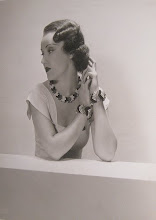
Cloris Leachman is an American actress of stage, film, and television. She has won eight Primetime Emmy Awards and one Daytime Emmy Award. She co-starred in the 1971 film The Last Picture Show for which she won the Academy Award for Best Supporting Actress. Leachman's longest running role was the nosy, self-centered and manipulative landlady Phyllis Lindstrom on the 1970s TV series Mary Tyler Moore, and later on the spinoff series, Phyllis. She also appeared in three Mel Brooks films, including Young Frankenstein. She had a regular role on the last two seasons of The Facts of Life portraying the character Beverly Ann Stickle. In recent years, she had a recurring role as Lois's mother Ida Gorski on Malcolm in the Middle. She also starred in the roast of Bob Saget in 2008. Leachman was a contestant on Season 7 of Dancing with the Stars, paired with Corky Ballas. At the age of 82, she is the oldest contestant to have danced on the series. She currently stars as Maw Maw in the television comedy Raising Hope. As Miss Chicago, Leachman competed in the 20th Miss America pageant and placed in the Top 16 in 1946. Leachman was the grand marshal for the 2009 New Year's Day Tournament of Roses Parade and Rose Bowl Game in Pasadena, California. She presided over the 120th parade, the theme being "Hats Off to Entertainment", and the 95th Rose Bowl game.

Gallery for vintage bombshell Cloris Leachman

Bookmark and Share

Cleo Moore was an American actress, usually seen in the role of a blonde bombshell in Hollywood films of the 1950s


Cleo Moore was an American actress, Date of Birth 31 October 1924, Date of Death 25 October 1973, Age 48 (age at death) Birthplace Baton Rouge, Louisiana, Location of Death Inglewood, California, Cause of Death Heart attack, Build Average Height 5' 4½" (164 cm) Eye Color Grey, Hair Color Dyed Blonde, usually seen in the role of a blonde bombshell in Hollywood films of the 1950s. After being raised in Baton Rouge, Louisiana, and moving to Hollywood in the late 1940s, Moore became a well-known pin-up girl. After breaking into minor films, Moore signed a brief contract with Warner Brothers in 1950. She then signed a two-year deal with RKO Radio Pictures, before signing a longer contract with Columbia Pictures in 1952. At Columbia, Moore was molded as the studio's next resident film star, with the studio hoping to make her "their Marilyn Monroe" or the "new Rita Hayworth". During her time at Columbia, Moore starred in One Girl's Confession, The Other Woman, and Women's Prison. However, Moore's career began to decline when the studio signed Kim Novak to a contract and started focusing on capitalizing her instead of Moore. Moore retired from acting in 1957 after starring in Hit and Run. Moore died in her sleep at the age of 48 in 1973. Despite the fact she never obtained true film stardom, Moore has become a cult fan favorite, with several of her films being considered cult classics

Gallery of vintage blonde bombshell Cleo Moore

Bookmark and Share

Cleatus Caldwell is an actress best known for Susie Steps Out 1946


Cleatus Caldwell Date of Birth 2 March 1923, Date of Death 6 June 1993, is an American actress, known for Susie Steps Out (1946) and Two Guys from Texas (1948). She was previously married to Ken Murray. Mother of Cort Murray. Full Name Cleatus Virginia Caldwell Age 70 (age at death) Birthplace Oklahoma Location of Death San Luis Obispo, CA, Build Slim Hair Color Brown - Ethnicity White Nationality American High School Fairfax High School Occupation Actress, Model

Gallery for vintage actress Cleatus Caldwell

Bookmark and Share

Claudia Dell was the model for the Columbia Pictures logo


Claudia Dell (January 10, 1910 – September 5, 1977) was an American showgirl and actress of the stage and Hollywood motion pictures. Her birth name was Claudia Dell Smith. She was born in San Antonio, Texas, on January 10, 1910. She attended school in San Antonio and Mexico. Dell was blonde and blue-eyed, with a porcelain face. Her height was 5'5". She was said to have been the model for the Columbia Pictures logo. Dell's aunt Mary Dell was an actress in vaudeville. Her niece desired to go on the stage from an early age. Claudia's first experience as an entertainer was playing her violin for soldiers at Kelly Field during World War I. She visited New York with Mary at age 14 and yearned to remain there. After completing her education at home, Dell returned to New York and became an understudy to Irene Delroy in the Ziegfeld Follies of 1927. She studied acting in New York City at the Academy and singing at the Juilliard School. Soon she was sent to London to play the lead in a musical comedy, Mary Mary. The play's run lasted one year. While in England, scouts from Warner Brothers noticed her and asked her to come to Hollywood. She returned to New York along with her aunt following a tour of southern Europe. Claudia became homesick, rejected leads offered her in two stage productions and moved to Los Angeles, California, where her family was living. Dell made her screen debut following an interlude of three months after coming west. She was given a contract by Warner Bros. to star in a number of musical pictures. She played the title role in a lavish Technicolor musical film, Sweet Kitty Bellairs (1930). Her next role was in another important musical, co-starring with Al Jolson in Big Boy (1930). Unfortunately, late in 1930, due to the beginning of the Great Depression, the public had grown weary of musicals. Warner Brothers, however, had already begun to film two other musicals (which would be released in 1931) in which Dell was given a leading role. The first of these was another lavish Technicolor production entitled Fifty Million Frenchmen. In the second film, Sit Tight (1931), she played the love interest of Paul Gregory, another musical star. Ironically, both pictures had their musical sequences cut before release. Warner Bros. dropped her option in 1931 (along with most of its other musical stars) and Claudia (having become associated with musicals) was relegated to Poverty Row productions. On December 29, 1934, Dell married theatrical agent Edward Silton. She gave her age as 22. The couple honeymooned at the Palm Springs, California, desert resort and also in Europe. They were later divorced. B-movies and radio She bounced back at Universal Pictures in the first of four westerns, Destry Rides Again (1932), which starred cowboy actor Tom Mix. In 1935 she played the heroine in a very low-quality serial, The Lost City. Other 1930s films in which she appeared included Algiers (1938) and We're in the Legion Now! (1936). By the close of the 1930s she was reduced to playing minor roles, and the 1940s continued her career decline. She was cast in low-budget productions like Black Magic (1944), a Charlie Chan series movie. Also in 1944 she was in "Meeting At Midnight", another Charlie Chan series movie. She had a part in Call of the Jungle (1944), a jungle "adventure" from Poverty Row studio Monogram Pictures that showcased stripper Ann Corio. After her film career faltered, Dell was under contract for five years with RKO Howard Hughes organization and did many Lux Radio Theater programs for Cecil B. DeMille and Orson Welles. She had her own television show in New York, Leave It to the Girls. She worked as a receptionist in a beauty shop in Hollywood and made appearances in early television dramas. In 1973 she became the student director of the John Robert Powers School of Charm and Modeling in Sherman Oaks, California, and Woodland Hills Promenade. Previously, she had worked 12 years as director of the John Robert Powers School in Beverly Hills, California. Claudia commented about her new position, "There is no better work than being able to be associated with a school which helps mold young people for the future and one that gives a whole new dimension to a woman's life." In the early 1970s Dell had a syndicated radio program that aired in the Midwest called The Claudia Dell Show. She wrote a syndicated column for eight years and in 1973 completed a collaboration with English author Helga Moray. This was for a television script which was considered for the Theater of the Week program. Claudia Dell died in Los Angeles in 1977.

Gallery of vintage showgirl Claudia Dell

Bookmark and Share

Clara Kimball Young was an American film actress who was popular in the early silent film era


Clara Kimball Young (September 6, 1890 – October 15, 1960) was an American film actress, who was highly regarded and publicly popular in the early silent film era. Clarisa Kimball was born in Chicago to Edward M. and Pauline (née Maddern) Kimball, travelling stock actors. She made her stage debut at the age of three, and throughout her early childhood travelled with her parents and acted with their theater company. She attended St. Francis Xavier Academy, Chicago. Afterwards she was hired into a stock company and resumed her stage career, travelling extensively through the United States and playing various small town theaters. Early in her career she met and married a fellow stock company and known Broadway actor named James Young. Young's previous wife had been the songwriter/lyricist Rida Johnson Young. After sending a photograph to Vitagraph Studios, Clara Kimball Young, as she was then known, and her husband were both offered yearly contracts in 1912. In the new medium of motion pictures, and without much screen competition, Clara Kimball Young's star at Vitagraph rose quickly. Young was predominantly cast in one and two reel roles as the virtuous heroine. By 1913 she had become one of the most popular leading ladies at Vitagraph and placed at number seventeen in a public popularity poll. Unfortunately, many of Young's films from her early period with Vitagraph are now lost. In 1914 Vitagraph released the drama My Official Wife which starred Young as a Russian revolutionary and was directed by her husband James Young and co-starred the popular leading man Earle Williams. The film, which is now lost, was an enormous success and launched Clara Kimball Young and Earle Williams into first place in the popularity polls and Young was immediately signed to a contract with legendary pioneering Hollywood mogul Lewis J. Selznick. After a string of successful roles, Young was firmly established as one of the chief attractions of World Film Corporation and her husband James was now a much sought-after director. By 1915 Young's popularity was rivalling that of other early luminary actresses of the era: Mary Pickford, Dorothy and Lillian Gish, Pearl White, Edna Purviance, and Mabel Normand. She became involved in a much publicized affair with Selznick, culminating in a 1916 divorce suit brought about by Young, charging his wife with alienation of affection. James Young finally obtained a final decree on April 8, 1919 on grounds of desertion. Selznick quickly formed the Clara Kimball Young Film Corporation, installing himself as president, and formed Selznick Productions to distribute her films and those of some other independent producers. After only four films with Selznick however, the personal and business relationship began to sour and Kimball Young struggled to extricate herself from all business arrangements with Selznick, accusing him of defrauding her of her profits through a series of dummy corporations and by electing himself president of her company while not permitting her any input in her business affairs. In 1917 Kimball Young became involved in an affair with Harry Garson, with whom she then teamed up with in a business venture. Garson had little experience in the motion picture business, and as a result Kimball Young's career began to sputter. Although she remained a popular actress into the early 1920s, Kimball Young suffered at the inexperience and alleged mismanagement and apathy of Garson. She began suffering a series of press attacks for her business dealings and personal relationship with Garson. By 1925, her stardom began to fade and she made her last silent film Lying Wives. Kimball Young spent the remainder of the 1920s performing in vaudeville, and in 1928 quietly married Dr. Arthur Fauman. The advent of sound briefly revived her career, and she appeared in several featured talkie roles for RKO Radio Pictures and Tiffany Studios with only modest success, appearing only in bit parts including a Three Stooges short, and extra roles in mostly lower budget pictures and having a stint on radio. One of her bigger roles is in the murder mystery The Rogues Tavern (1936) where she plays a sweet but fussy motherly woman who is hiding a very big secret. She quietly retired from her acting career in 1941. Clara Kimball Young died of a stroke at the Motion Picture House on October 15, 1960, aged 70, in Woodland Hills, California and was interred at the Grand View Memorial Park Cemetery in Glendale, California. For her contribution to the motion picture industry, Clara Kimball Young was given a star on the Hollywood Walk of Fame at 6513 Hollywood Blvd., in Hollywood, California, USA

gallery of silent actress Clara Kimball Young

Bookmark and Share

Clara Bow The IT Girl


Clara Gordon Bow was an American actress who rose to stardom in silent film during the 1920s. It was her appearance as a plucky shopgirl in the film It that brought her global fame and the nickname "The It Girl". Bow came to personify the Roaring Twenties and is described as its leading sex symbol. She appeared in 46 silent films and 11 talkies, including hits such as Mantrap, It and Wings. She was named first box-office draw in 1928 and 1929 and second box-office draw in 1927 and 1930. Her presence in a motion picture was said to have ensured investors, by odds of almost 2-to-1, a "safe return". At the apex of her stardom, she received more than 45,000 fan letters in a single month. After marrying actor Rex Bell in 1931, Bow retired from acting and became a rancher in Nevada. Her final film, Hoop-La, was released in 1933. In September 1965, Bow died of a heart attack at the age of 60.  

The Beauty Contestant

Clara Bow, the It Girl, comes to epitomize the Hollywood flapper of 1920s, a time before sound in the pictures and a time when the swimsuit is evolving. Bow is a Brooklyn girl born in 1905, so she is 17 in 1922 when she wins a beauty contest and earns her first movie role. Her makeup, including decorative lipstick and eyebrows which have been shaven off and painted back on, captures the style of the flapper and is a feature of her portrait pictures. In an era or chorines, Bow dyes her hair flaming red-orange (which you can't see in black and white movies, so this is a "live" thing). Like most entrants into show business, Bow shoots nudes in her early years, and her pinups through out the 1920s include bare-midriff and leggy stage costumes, swimsuits, lingerie, and gowns. Bow often plays the independent gal who is not to be intimidated; and her famous film stills include scenes in the bedroom wearing underwear, cigarette smoking, posing with a surfboard and a gun, and the dance-hall gal. Bow begins her film career but moves to Hollywood in the mid-1920s, where she will make a string of movies with Paramount throughout the late 1920s including Dancing Mothers, Mantrap (1926) and Fascinating Youth.  

The Swimsuit Pinup

Bikini Science must of course dwell upon her role as a swimsuit pinup, for in her era it is the maillot which possesses momentum. The deux-pièces hasn't evolved yet and will not until after her era--the two piece, bare midriff swimsuit. Bow bares her belly and she does wear swimsuits, but there is scant evidence she combines both. Bare arm, cleavage, bare bellies, legs, even belly buttons are all in play in the theater and the movies, but their combination into a two piece swimsuit does not occur in Bow's heyday. And there is certainly no reason to suspect Bow would not take the exposure. She had no reason not too--she had bared all more than once--rather the situation may be simply that the species hasn't evolved yet. With Bow the embellishment is in the maillot plays a central roll in her Hollywood pinups. They are not all of her, of course; there exists a deep records of her headshots, her costumes, with fellow stars, in scenes. 16 of 52 videos survive in VHS. Who knows what all stands behind that. Bow's maillots have the opportunity to draw upon two decades of maillot development--from the pinup and French postcard to competition for maillot attention in general. There is a spin of the maillot that addresses a reductionist approach to maillot--sort of the digression of the pantaloon and the skirt into the pure maillot tank silhouette; plus fancy business like a tighter fit, elastics, opening the armhole and cleavage. It may be possible to correlate Bow with some of these evolutions temporally, but it may also be the case that in the tactical these ideas dance around and don't necessarily follow a single order. Different talent may take different sequences. There is the individual vs the cultural. In any respect, the Bikini Scientist is uncertain about Bow sequences, between press release and movie release of material, and so on, to feel that perhaps just sharing Bow is enough.  

The Sex Symbol

So, in now particular order, some of Bow's maillots, all assumed to be late 1920s: a backless, haltered maillot, a X-back with playsuit overtones, a fairly pure maillot tank (CB2L30), a tight-fitting maillot pantaloon, swinging from a tree, and skirted, but with a plunging armhole. It appears that once a maillot is settled into it makes a lot of appearances, as in this skirted maillot believed to be related to the movie Red Hair, Bow's signature color. Rough House Rosie introduces skirted maillot with a button front panel , and a boxing top and trunks. Bow's career peeks in 1927 with the movie It, the title which becomes her moniker. In 1927 she also embraces some of her original deshable: there are questions raised if the airmen in Wings catch her topless, but there is little doubt about the seduction in Hula. In Hula Bow introduces a more streamlined, open armhole tank. But that is just the swimsuit seduction. As a Hawaiian maiden, Bow dons a bandeau and grass hula skirt to dance in a culture also popularized also by Gilda Gray, Betty Compton, and others. Bow caps the movie with a nude skinny-dippin' bathing scene. The bathing scene has resonance to Annette Kellerman from before, and Heddy Lamarr in the future, because of its "Adam and Eve" nature. Three Weekends, made for Paramount in 1928, showcases Bow in a polka-dot tank maillot as well as another bare-belly harem outfit. Another tank top and pantaloons are suitable for a boat feature possibly related to The Fleet's In, made the same year.  

Her Last Movies

Bow's first sound film is Wild Party, which features a single-should strap maillot. In the early 1930s a Ross Verlang Movie Star trading card features Bow in a maillot playsuit with Felix the Cat. Both wink. And although there is no evidence Bow ever wore a deux-pièces swimsuit, this apparent maillot cutout may date from the late 1920s or early 1930s. Bow's last two movies are made for Fox. Call Her Savage is released in 1932, and the successful Hoop-La, with its revealing dance costumes, in 1933. Despite the film's success, Bow retires from filmmaking and will live a secluded life battling mental illness until her death in 1965.

Fan tribute of hot sex symbol and flapper Clara Bow

Bookmark and Share

Claire Kelly was an American actress and a model


Claire Kelly was born on March 15, 1934 in San Francisco, Date of Death 1 July 1998, California, USA as Claire Ann Green. She was an actress, known for A Guide for the Married Man (1967), The Badlanders (1958) and Ask Any Girl (1959). She was married to Kenaston, Robert, Perry Lopez and George DeWitt. She died on July 1, 1998 in Palm Springs, California. 1958 Deb Star.Initially worked as a model in Miami. Was several times on the cover of McCall and continued her modelling career throughout the 1950's. She made the cover of "Picture Week" in 1956. In 1959, she was touted as "the screen's most exciting discovery since Rita Hayworth".Trained for acting at the Neighborhood Playhouse, New York.

Gallery for vintage fatale Claire Kelly

Bookmark and Share

Claire James was an American actress


Claire James was born on April 23, 1920 in Minneapolis, Minnesota, USA. She was an actress, known for Jack Armstrong (1947), Hop Harrigan (1946) and Voodoo Man (1944). She was married to Dr. Peter L. Hoffman, William Girard, Busby Berkeley and Raymond Dorsey. She died on January 18, 1986 in Los Angeles, California, USA.
Older sister of actress Lois James.Ex-daughter-in-law of Gertrude Berkeley.Was of Swedish descent.Her father was fire chief at 20th Century Fox in the 1930's.Was signed under contract by MGM in 1938.Was "Miss California" in 1938 and finished First runner-up in the 1938 Miss America pageant.

Bookmark and Share

Cheryl Walker was an American fashion model and actress


Cheryl Walker (August 1, 1918 – October 24, 1971) was an American fashion model and actress. Born in South Pasadena, California to Everett Dale and Pauline S. Walker, Cheryl Walker won the 1938 Tournament of Roses pageant leading to a brief career as a model and the beginning of a brief film career. She appeared in small, uncredited roles in several films from 1938 until her first substantial role in Chasing Trouble (1940) with Frankie Darro. She briefly took the name Sharon Lee for the film Secrets of a Model (1940) which provided her first starring role, before returning to minor roles. She was Veronica Lake's "double" in the film Sullivan's Travels (1941), and was the female lead in Shadows on the Sage (1942). She also was Claudette Colbert's stand-in on No Time for Love. Her most substantial role was in Stage Door Canteen (1943) in which she played a hostess at the canteen who meets and falls in love with a serviceman. She continued appearing in films for the next few years until her retirement in 1948. In the late 1950s, Walker traveled throughout Southern California giving speeches to civic and church groups on "the menace of communism". She belonged to the San Marino Republican Women's Club and co-founded and was president of the Tuesday Morning Study Club which presented annual patriotism awards to anti-communist activists such as George Putnam, Baxter Ward, Matt Cvetic, Chief William Parker, Congressman Donald Jackson, and Jenkin Lloyd Jones. [1] On December 16, 1940 she married Dr. Jay Etzell Coumbe; they had one daughter, Dayle. They later divorced. She married, secondly, to Tway W. Andrews, who survived her. She died of cancer at Huntington Memorial Hospital in Pasadena.

Gallery for vintage actress Cheryl Walker

Bookmark and Share

Cheryl Ladd is an American actress, singer and author


Cheryl Ladd is an American actress, singer and author. Ladd is best known for her role as Kris Munroe in the television series Charlie's Angels, hired amid a swirl of publicity prior to its second season in 1977 to replace the departing Farrah Fawcett-Majors. Ladd remained with the show until its cancellation in 1981, (born Cheryl Jean Stoppelmoor; July 12, 1951) Ladd initially came to Hollywood in 1970 to begin a career in music (she was known as "Cherie Moor" when she was the singing voice of Melody on Hanna-Barbera's Josie and the Pussycats animated series). She soon began to land non-singing roles in commercials and episodic television—including guest appearances on shows such as The Rookies, The Partridge Family and Happy Days. The Charlie's Angels series made her an overnight star, and Ladd took the opportunity of her sudden popularity to further pursue her musical interests, guest-starring in musical-comedy variety series and specials, performing the National Anthem at the Super Bowl XIV in January 1980, and releasing three albums, enjoying a Top 40 Hot 100 single and a Gold record. In September 2000, Ladd starred on Broadway, taking over the title role from Bernadette Peters in a revival of Irving Berlin's Annie Get Your Gun. She played the role until January 2001, when Reba McEntire took over. Following Charlie's Angels, Ladd remained a familiar face on television and has starred in more than 30 made for television films, including a coveted role as Grace Kelly, the Philadelphia heiress who became a Hollywood glamour girl and then a European princess, in a biopic that was begun shortly before Kelly's death. She also starred in feature films such as Purple Hearts, Millennium, Poison Ivy (featuring Drew Barrymore, who later starred in the film adaptations of Charlie's Angels) and Permanent Midnight. Ladd had the lead role in the television series One West Waikiki (1994–96), and made guest appearances in other TV shows such as Charmed, Hope and Faith and CSI: Miami. From 2003 until the show's cancellation in 2008, Ladd played Jillian Deline, the wife of the lead character Ed Deline (James Caan), in 29 episodes of the television drama Las Vegas. In 1996, Ladd published a children's book, The Adventures of Little Nettie Windship. In 2005, she published Token Chick: A Woman’s Guide to Golfing With the Boys, an autobiographical book which focused on her love of golf. For several years, Ladd hosted a golf tournament sponsored by Buick. On April 17, 2010, Ladd, along with her co-angel, Jaclyn Smith, accepted the "2010 TV Land Pop Culture Award" for Charlie's Angels. In 2010, Ladd filmed a TV movie titled Love's Everlasting Courage for the Hallmark Channel, which aired on October 1, 2011. That same month, she guest starred on NCIS in the show's ninth season episode "Thirst" as the love interest of medical examiner Dr. Donald "Ducky" Mallard. In December 2011, she guest starred in an episode of Chuck, playing Sarah Walker's mother

Imdb has Info and Pics of Cheryl Ladd

Bookmark and Share