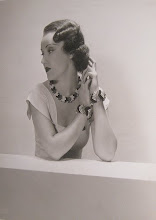
Dani Crayne is a former American model and actress


Dani Crayne was born on December 25, 1934 in Minneapolis, Minnesota, USA as Darlyne Danielle Swanson. She is an actress, known for Written on the Wind (1956), Shoot-Out at Medicine Bend (1957) and The Unguarded Moment (1956). She was previously married to Hal Needham, David Janssen, Buddy Greco and Donalde Crayne. Full Name Darlyne Danielle Swanson Other Names Darlyne Crayne, Darlyne Greco, Darlyne Janssen, Darlyne Needham, Build Average, Eye Color Blue, Hair Color Dyed Blonde, Star Sign Capricorn, Nationality American, Claim to Fame Ain`t Misbehavin` (1955)

Gallery for blonde actress Dani Crayne

Bookmark and Share

Dana Plato was an American actress most memorable playing Kimberly Drummond on the U.S. television sitcom Diffrent Strokes


Dana Michelle Plato (1964–1999) was an American actress born in Maywood, California, on Saturday 7 November 1964, notable for playing the role of Kimberly Drummond on the U.S. television sitcom Diff'rent Strokes. After leaving the cast of Diff'rent Strokes, Plato attempted to establish herself as a working actress, with mixed success: she worked sporadically in made-for-TV movies and in independent films, and also did voice-over work. At age 34, after years of struggling with poverty and substance abuse, Plato took a lethal overdose of the painkiller Lortab and the muscle-relaxant Soma. Died: May 8, 1999 (age 34) in Moore, Oklahoma, USA

Imdb has Info and Pics of Dana Plato

Bookmark and Share

Cyd Charisse was an American actress her films include Singin' in the Rain, The Band Wagon and Silk Stockings


Cyd Charisse (March 8, 1922 – June 17, 2008) was an American actress and dancer. After recovering from polio as a child, and studying ballet, Charisse entered films in the 1940s. Her roles usually focused on her abilities as a dancer, and she was paired with Fred Astaire and Gene Kelly; her films include Singin' in the Rain (1952), The Band Wagon (1953) and Silk Stockings (1957). She stopped dancing in films in the late 1950s, but continued acting in film and television, and in 1992 made her Broadway debut. In her later years, she discussed the history of the Hollywood musical in documentaries, and was featured in That's Entertainment! III in 1994. She was awarded the National Medal of the Arts and Humanities in 2006. Charisse was born as Tula Ellice Finklea in Amarillo, Texas, the daughter of Lela (née Norwood) and Ernest Enos Finklea, Sr., who was a jeweler. Her nickname "Sid" was taken from a sibling trying to say "Sis". (It was later spelled "Cyd" at MGM to give her an air of mystery.) She was a sickly girl who started dancing lessons at six to build up her strength after a bout with polio. At 12, she studied ballet in Los Angeles with Adolph Bolm and Bronislava Nijinska, and at 14, she auditioned for and subsequently danced in the Ballet Russe de Monte Carlo as "Felia Siderova" and, later, "Maria Istomina".[6] During a European tour, she met up again with Nico Charisse, a handsome young dancer she had studied with for a time in Los Angeles. They married in Paris in 1939. They had a son, Nicky, born in 1942. The outbreak of World War II led to the breakup of the company, and when Charisse returned to Los Angeles, David Lichine offered her a dancing role in Gregory Ratoff's Something to Shout About. This brought her to the attention of choreographer Robert Alton – who had also discovered Gene Kelly – and soon she joined the Freed Unit at Metro-Goldwyn-Mayer, where she became the resident MGM ballet dancer. In an early role, she had her first speaking part supporting Judy Garland in the 1946 film The Harvey Girls. Charisse was principally celebrated for her onscreen pairings with Fred Astaire and Gene Kelly. She first appeared with Astaire in a brief routine in Ziegfeld Follies (produced in 1944 and released in 1946). Her next appearance with him was as the lead female role in The Band Wagon (1953), where she danced with Astaire in the acclaimed "Dancing in the Dark" and "Girl Hunt Ballet" routines. It was one of her most memorable dance numbers. Critic Pauline Kael said that "when the bespangled Charisse wraps her phenomenal legs around Astaire, she can be forgiven everything, even her three minutes of 'classical' ballet and the fact that she reads her lines as if she learned them phonetically. Charisse and Gene Kelly in the "Broadway Melody Ballet" sequence from Singin' in the Rain As Debbie Reynolds was not a trained dancer, Gene Kelly chose Charisse to partner with him in the celebrated "Broadway Melody" ballet finale from Singin' in the Rain (1952), and she co-starred with Kelly in 1954's Scottish-themed musical film Brigadoon. She again took the lead female role alongside Kelly in his penultimate MGM musical It's Always Fair Weather (1956). In 1957, she rejoined Astaire in the film version of Silk Stockings, a musical remake of 1939's Ninotchka, with Charisse taking over Greta Garbo's role. In his autobiography, Astaire paid tribute to Charisse, calling her "beautiful dynamite" and writing: "That Cyd! When you've danced with her you stay danced with." She had a slightly unusual serious acting role in Party Girl (1958), where she played a showgirl who became involved with gangsters and a crooked lawyer, although it did include two dance routines. In her autobiography, Charisse reflected on her experience with Astaire and Kelly: "As one of the handful of girls who worked with both of those dance geniuses, I think I can give an honest comparison. In my opinion, Kelly is the more inventive choreographer of the two. Astaire, with Hermes Pan's help, creates fabulous numbers – for himself and his partner. But Kelly can create an entire number for somebody else ... I think, however, that Astaire's coordination is better than Kelly's ... his sense of rhythm is uncanny. Kelly, on the other hand, is the stronger of the two. When he lifts you, he lifts you! ... To sum it up, I'd say they were the two greatest dancing personalities who were ever on screen. But it's like comparing apples and oranges. They're both delicious." After the decline of the Hollywood musical in the late 1950s, Charisse retired from dancing but continued to appear in film and TV productions from the 1960s through the 1990s. She had a supporting role in Something's Got to Give (1962), the last, unfinished film of Marilyn Monroe. She made cameo appearances in Blue Mercedes's "I Want to Be Your Property" (1987) and Janet Jackson's "Alright" (1990) music videos. Her last film appearance was in 1994 in That's Entertainment! III as one of the onscreen narrators of a tribute to the great MGM musical films. Charisse's first husband, whose surname she kept, was Nico Charisse (March 1906 – April 1970); they were married from 1939 and had a son, Nico "Nicky" Charisse, before divorcing in 1947. In 1948, Charisse married singer Tony Martin. They had also had a son, Tony Martin, Jr. (August 28, 1950 - April 10, 2011), and remained married until her death. Her daughter-in-law is actress and model Liv Lindeland, married to Tony Martin, Jr. until his death in 2011. In 1976, Charisse and her husband Tony Martin wrote their joint memoirs with Dick Kleiner entitled The Two of Us (1976). In 1990, following similar moves by MGM colleagues Debbie Reynolds and Angela Lansbury, Charisse produced the exercise video Easy Energy Shape Up, targeted for active senior citizens. She made her Broadway debut in 1992 in the musical version of Grand Hotel as the aging ballerina, Elizaveta Grushinskaya.[4] In her eighties, Charisse made occasional public appearances and appeared frequently in documentaries spotlighting the golden age of Hollywood. She was featured in the 2001 Guinness Book of World Records under "Most Valuable Legs", because a $5 million insurance policy was reportedly issued on her legs in 1952. MGM was reputed to have insured her legs for a million dollars each, but Charisse revealed that that had been an invention of the MGM publicity machine. Charisse was admitted to Cedars-Sinai Medical Center in Los Angeles, California on June 16, 2008, after suffering an apparent heart attack. She died the following day at age 86. She was a practicing Methodist, and due to her husband's religion she was buried at Hillside Memorial Park Cemetery, a Jewish cemetery in Culver City, California, following a Methodist ceremony

Gallery of vintage Actress Cyd Charisse

Bookmark and Share

Cybill Lynne Shepherd is an American actress, singer and former model better known roles included starring as Betsy in Taxi Driver and as Maddie Hayes in Moonlighting


Cybill Lynne Shepherd (born February 18, 1950) is an American actress, singer and former model. Her better known roles include starring as Jacy in The Last Picture Show (1971), as Kelly in The Heartbreak Kid (1972), as Betsy in Taxi Driver (1976), as Maddie Hayes in Moonlighting (1985–1989), as Cybill Sheridan in Cybill (1995–1998), as Phyllis Kroll in The L Word (2007–2009) and as Madeleine Spencer in Psych (2008–2013). Shepherd was born in Memphis, Tennessee, the daughter of Patty (née Shobe), a homemaker, and William Jennings Shepherd, who managed a home appliance business. Named after her grandfather Cy and her father Bill, Shepherd won the 1966 "Miss Teenage Memphis" contest at age 16, and the 1968 "Model of the Year" contest at age 18, making her a fashion star of the 1960s, resulting in fashion modeling work through high school and after. According to Shepherd's autobiography, it was a 1970 Glamour magazine cover that caught the eye of film director Peter Bogdanovich. His then-wife, Polly Platt, claimed that it was she who, upon seeing the cover in a check-out line in a Ralphs grocery store in southern California, said "That's Jacy," referring to the role Bogdanovich was casting—and ultimately offered to Shepherd—in The Last Picture Show (1971). She developed a relationship with him on the set, along with co-star Jeff Bridges, screenwriter Larry McMurtry, and Frank Marshall (film producer). Her first film was The Last Picture Show (1971 film), also starring Jeff Bridges and Timothy Bottoms. The film became a critical and box office hit, earning several Academy Awards and nominations. Shepherd was nominated for a Golden Globe. Shepherd was cast opposite Charles Grodin in The Heartbreak Kid (1972). She played Kelly, the beautiful, sunkissed young woman whom Grodin's character falls for while on his honeymoon in Miami. Directed by Elaine May, it was another critical and box office hit. Also in 1972, Shepherd posed as a Kodak Girl for the camera manufacturer's then ubiquitous cardboard displays. In 1974, Shepherd released her debut studio album Cybill Does It...To Cole Porter for MCA Records and again teamed with Peter Bogdanovich for the title role in Daisy Miller, based on the Henry James novella. The film—a period piece set in Europe—proved to be a box office failure. Her next film, At Long Last Love (1975), a musical again directed by Bogdanovich, also flopped. Shepherd returned with good reviews for her work in Martin Scorsese's Taxi Driver (1976). According to Shepherd, Scorsese had requested a "Cybill Shepherd type" for the role. She portrayed an ethereal beauty with whom Robert De Niro's character, Travis Bickle, becomes enthralled. After a series of less successful roles, including The Lady Vanishes, the remake of Alfred Hitchcock's 1938 film of the same name, she moved back to her home town of Memphis to work in regional theatre.[8] Returning to New York in 1982, she took to the stage alongside James MacArthur in a theatre tour of Lunch Hour by Jean Kerr. Back from Memphis, Shepherd won the role of Colleen Champion in the night-time drama, The Yellow Rose (1983), opposite Sam Elliott. Although critically acclaimed, the series lasted only one season. A year later Shepherd was cast as Maddie Hayes in ABC's Moonlighting (1985–1989), which became the role that defined her career. The producers knew that her role depended on having chemistry with her co-star, and she was involved in the selection of Bruce Willis. A lighthearted combination of mystery and comedy, the series won Shepherd two Golden Globe awards. She starred in Chances Are (1989) with Robert Downey Jr. and Ryan O'Neal, receiving excellent reviews. She then reprised her role as Jacy in Texasville (1990), the sequel to The Last Picture Show (1971), as the original cast (including director Peter Bogdanovich) reunited 20 years after filming the original. She also appeared in Woody Allen's Alice (1990), and Eugene Levy's Once Upon a Crime (1992), as well as several television films. In 1997 she won her third Golden Globe award for CBS' Cybill (1995–1998), a television sitcom, in which the title character, Cybill Sheridan, an actress struggling with hammy parts in B movies and bad soaps, was loosely modeled on herself (including portrayals of her two ex-husbands). Shepherd at 42nd KVIFF, April 2007 In 2000 Shepherd's bestselling autobiography was published, titled Cybill Disobedience: How I Survived Beauty Pageants, Elvis, Sex, Bruce Willis, Lies, Marriage, Motherhood, Hollywood, and the Irrepressible Urge to Say What I Think, written in collaboration with Aimee Lee Ball.[11] That same year, Shepherd hosted a short-lived syndicated talk show version of the book Men Are from Mars, Women Are from Venus, but left the show in early 2001 and was replaced by Cristina Ferrare, Bo Griffin, Samantha Phillips, Drew Pinsky, and Rondell Sheridan. In 2003 she guest-starred on 8 Simple Rules as Cate Hennessy's (portrayed by Katey Sagal) sister. She has played Martha Stewart in two television films: Martha, Inc.: The Story of Martha Stewart (2003) and Martha: Behind Bars (2005). From 2007 until it ended, Shepherd appeared on the Showtime drama, The L Word as the character Phyllis Kroll for the show's final three seasons. In 2008 she joined the cast of the USA Network television series Psych as Shawn Spencer's mother, Madeleine Spencer. On November 7, 2008, Shepherd guest-starred in a February episode of the CBS drama Criminal Minds. In the fall of 2010 Shepherd appeared in an episode of ABC's new show, No Ordinary Family.[13] and in November of the same year she guest-starred in an episode of CBS' $h*! My Dad Says. After appearing alongside Jennifer Love Hewitt in the 2010 television film The Client List, Shepherd became a regular on the series based on the film in 2012 and will continue this role in the show's second season in 2013. In July 2012 Shepherd made her Broadway debut in the revival of Gore Vidal's The Best Man at the Gerald Schoenfeld Theatre alongside James Earl Jones, John Stamos, John Larroquette, Kristin Davis and Elizabeth Ashley to positive reviews

Cybill Shepherd Picture Gallery

Bookmark and Share

Constance Moore was a singer and actress best known for the classic 1939 movie serial Buck Rogers in which she played Wilma Deering


Constance Moore (January 18, 1920, Sioux City, Iowa — September 16, 2005 in Los Angeles, California) was a singer and actress. Her most noted work was in wartime musicals such as Show Business and Atlantic City and the classic 1939 movie serial Buck Rogers, in which she played Wilma Deering, the only female character in the serial. Moore was born in Sioux City, Iowa, but her family moved away when she was aged six months and she spent most of her formative years in Dallas, Texas. All she wanted was to sing, and in the 30's she got a job with CBS radio. While working on one of their musical series she impressed a scout from Universal Studios and signed a contract with them. Among her costars was W. C. Fields in You Can't Cheat an Honest Man (1939). She appeared on Broadway in the musical By Jupiter. She retired from films in 1947 but made sporadic appearances over the next few decades. She appeared on a USO tour with Bob Hope and the Nicholas Brothers in 1951. She painted still lifes and in 1976 was the chairperson for the Braille Institute Auxiliary in Beverly Hills, California. Moore married her agent, John Maschio, when she was eighteen. They were together for 63 years until his death in 1998. She guest starred as Doris in the episode "Just a Housewife" (1960) on the ABC sitcom, The Donna Reed Show. In the 1961-1962 season, Moore co-starred in ten episodes on CBS as Robert Young's romantic interest in his short-lived nostalgia series, Window on Main Street. The series also featured Ford Rainey as a newspaper editor and the then child actor Tim Matheson. Moore died September 16, 2005, at the age of 85 following a long illness. She was interred at Westwood Village Memorial Park Cemetery, Los Angeles. Moore was survived by two children, two sisters, two grandchildren and a great-grandchild.

Gallery for vintage actress Constance Moore

Bookmark and Share

Constance Dowling was an American model turned actress of the 1940s and 1950s


Constance Dowling (July 24, 1920 - October 28, 1969) was an American model turned actress of the 1940s and 1950s. Born in New York City, Dowling was a model and chorus girl before moving to California in 1943. She was the elder sister of actress Doris Dowling. Prior to her move to Hollywood, Dowling appeared in several Broadway productions, including Panama Hattie (with sister Doris), Hold On To Your Hats, and The Strings, My Lord, Are False. Dowling began her screen career appearing in Up in Arms (1944) for Samuel Goldwyn. She appeared in a few films after that, including the film noir Black Angel (1946) but her film career did not advance. Dowling lived in Italy in 1947 through 1950 and appeared in some unmemorable Italian films. Dowling returned to Hollywood in the 1950s and landed a part in the sci-fi film Gog, her last film. Personal life Dowling had been involved in a long affair with married director Elia Kazan in New York. He couldn't bring himself to leave his wife and the affair ended when Dowling went to Hollywood under contract to Goldwyn.[3] She was later linked with Italian poet/novelist Cesare Pavese who committed suicide in 1950 after being rejected by Dowling. One of his last poems is entitled "Death will come and she'll have your eyes". In 1955, Dowling married film producer Ivan Tors, with whom she had three sons: Steven, David, and Peter Tors, as well as a foster child, Alfred Ndwego of Kenya. She retired from acting after this marriage. Death On October 28, 1969, Dowling died at the age of 49 of a heart attack

Gallery for fake blonde Constance Dowling

Bookmark and Share

Constance Bennett was an American actress best known for her roles in the 1920s and 30s


Constance Campbell Bennett (October 22, 1904 – July 24, 1965) was an American actress. She was born in New York City, the daughter of actor Richard Bennett and actress Adrienne Morrison, whose father was the stage actor Lewis Morrison (Morris W. Morris), a performer of English, Spanish, Jewish, and African ancestry. Constance's younger sister was prominent actress Joan Bennett. Their other sibling was actress/dancer Barbara Bennett. She started off with a spell in a convent but decided to go into the family business. Independent, cultured, ironic and outspoken, Constance, the first Bennett sister to enter motion pictures, appeared in New York-produced silent movies before a meeting with Samuel Goldwyn led to her Hollywood debut in Cytherea (1924). She abandoned a burgeoning career in silents for marriage to Philip Plant in 1925; She resumed her film career after their divorce, with the advent of talking pictures (1929), and with her delicate blonde features and glamorous fashion style, she quickly became a popular film star. In 1931, a short-lived contract with Metro Goldwyn Mayer earned her $300,000 for two movies which included The Easiest Way and made her one of the highest paid stars in Hollywood. Warner Brothers paid her the all-time high salary of $30.000 a week for "Bought!" in 1931. Richard Bennett, her father, was also cast in this film. The next year she moved to RKO, where she acted in What Price Hollywood? (1932), directed by George Cukor, an ironic and at the same time tragic behind-the-scenes looks at the old Hollywood studio system, in which she gave one of her finest performances. In this movie she is a starstruck waitress named Mary Evans, who manages to make a good impression on a prominent film director (played by Lowell Sherman); with his patronage she becomes a movie star. While the director has some serious alcohol problems, she marries a wealthy playboy (played by Neil Hamilton), who genuinely loves his wife but is jealous of the demands made on her by her career. He leaves her, but not before Mary has been impregnated. She begins to turn her attentions to her mentor, but it is too late: he kills himself in her bedroom. Hoping to heal her emotional wounds, Mary flees to Paris with her child, where she is reunited with her contrite husband. Bennett next showed her versatility in the likes of Our Betters (1933), Bed of Roses (1933) with Pert Kelton, The Affairs of Cellini (1934), After Office Hours (1935) with Clark Gable, the original Topper (1937, in a career standout as Marian Kerby opposite Cary Grant, a role she repeated in the 1939 sequel, Topper Takes a Trip), the ultimate madcap family comedy Merrily We Live (1938) and Two-Faced Woman (1941, supporting Greta Garbo). By the 1940s, Bennett was working less frequently in film but was in demand in both radio and theatre. Shrewd investments had made her a wealthy woman, and she founded a cosmetics and clothing company. After World War II She had a major supporting role in Warner Bros.'s The Unsuspected (1947) opposite Claude Rains, in which she played the program director who helps prove that Rains is guilty of murder. She made no films from the early 1950s until 1965 when she made a comeback in the film Madame X (released posthumously in 1966) playing Lana Turner's mother-in-law. Shortly after filming was completed, Bennett collapsed and died from a cerebral hemorrhage at the age of 60. In recognition of her military contributions, and as the wife of Theron John Coulter, who had achieved the rank of brigadier general, she was buried in Arlington National Cemetery. Coulter died in 1995 and was buried with her. Bennett has a star on the Hollywood Walk of Fame for her contribution to motion pictures, at 6250 Hollywood Boulevard, a short distance from the star of her sister, Joan. Personal life Bennett was married five times. In 1921 Bennett eloped with Chester Hirst Moorehead of Chicago, the son of a surgeon. The marriage was annulled in 1923. Bennett eloped with millionaire socialite Philip Morgan Plant (died 1941) in 1925; they divorced in 1929. In 1932, Bennett brought back from Europe a three-year-old child, whom she claimed to have adopted and named Peter Bennett Plant. In 1942, however, during a battle over a large trust fund established to benefit any descendants of her former husband, Bennett announced that her adopted son actually was her natural child by Plant, born after the divorce and kept hidden in order to ensure that the child's biological father did not get custody. During the court hearings, the actress told her former mother-in-law and her husband's widow that "if she got to the witness stand she would give a complete account of her life with Plant. The matter was settled out of court." She captured numerous headlines in 1931, when she married one of Gloria Swanson's former husbands, Henri le Bailly, the Marquis de La Coudraye de La Falaise (1898–1972), a French nobleman and film director. Bennett and de la Falaise founded Bennett Pictures Corp. and co-produced two films which were the last filmed in Hollywood in the two-strip Technicolor process, Legong: Dance of the Virgins (1935) filmed in Bali, and Kilou the Killer Tiger (1936), filmed in Indochina. They were divorced in 1940. In 1941, Bennett married the actor Gilbert Roland, with whom she had two daughters, Lorinda and Christina (a.k.a. Gyl). They were divorced in 1946. In June 1946, Bennett married US Air Force Colonel (later Brigadier General) John Theron Coulter (1912–1995). After her marriage, she concentrated her efforts on providing relief entertainment to US troops still stationed in Europe, winning military honors for her services. She was the aunt of Morton Downey Jr., the son of Constance's sister Barbara.

gallery of vintage actress Constance Bennett

Bookmark and Share

Connie Stevens is an American actress and singer better known for her roles in the television


Connie Stevens (born August 8, 1938) is an American actress and singer, better known for her roles in the television series Hawaiian Eye and other TV and film work. She was born Concetta Rosalie Ann Ingoglia in Brooklyn, New York, the daughter of Peter Ingoglia (known as musician Teddy Stevens) and singer Eleanor McGinley. She adopted her father's stage name of Stevens as her own. Her parents were divorced and she lived with her grandparents and attended Catholic boarding schools. Actor John Megna was her half-brother. At the age of twelve, she witnessed a murder in Brooklyn and was sent to live in Boonville, Missouri, with family friends. Coming from a musical family, she joined the singing group called The Fourmost, with Tony Butala, who went on to fame as one of The Lettermen. In 1953, Stevens moved to Los Angeles with her father. When she was 16, she replaced the alto in a singing group, The Three Debs. She enrolled at a professional school (The Georgia Massey Professional School in the San Fernando Valley), sang professionally and appeared in local repertory theater. Career Stevens started working as a movie extra, and stand-in. After she'd appeared in four B movies, Jerry Lewis saw her in Dragstrip Riot and cast her in Rock-A-Bye Baby. Soon after that, she signed a contract with Warner Brothers. She played 'Cricket Blake' in the popular television detective series Hawaiian Eye from 1959 to 1963, a role that made her famous; her principal costar was Robert Conrad. In a televised interview on August 26, 2003, on CNN's Larry King Live, Stevens recounted that while on the set of Hawaiian Eye she was told she had a telephone call from Elvis Presley. "She didn't believe it, but in fact it was Elvis, who invited her to a party and said that he would come to her house and pick her up personally"; they subsequently dated Stevens has been married twice: her first was to actor James Stacy from 1963 until their 1967 divorce; her second was to singer Eddie Fisher from 1967 until their 1969 divorce. She is the mother of actresses Joely Fisher and Tricia Leigh Fisher. She maintains homes in Beverly Hills, Palm Springs; Jackson Hole, Wyoming; and New York City. Stevens has a star on the Palm Springs Walk of Stars in Palm Springs, a star on the Hollywood Walk of Fame at 6249 Hollywood Boulevard in Hollywood and a star on the Italian Walk of Fame in Toronto, Canada. On September 23, 2005, Stevens was elected secretary-treasurer of the Screen Actors' Guild. This is the union's second-highest elected position. She succeeded James Cromwell, who did not seek re-election. Stevens has contributed thousands of dollars over the years to the Republican Party, including donations to the Republican Congressional Committee and to both of Arizona Senator John McCain's runs for president. On June 29, 2013 the National Society of Daughters of the American Revolution's President General, Merry Ann Wright, presented Connie with the Founder's Medal for Patriotism, for her 40+ years of work with the USO. She was applauded by more than 1,200 Daughters.

Check out Connie Stevens Official Website

Bookmark and Share

Colleen Miller is an American actress best known for her roles in westerns Gunfight at Comanche Creek and Four Guns to the Border


Colleen Miller (born November 10, 1932 in Yakima, Washington) is an American actress. She has been in several movies such as Gunfight at Comanche Creek (1963) and Four Guns to the Border (1954). She currently resides in California, Full Name Colleen J. Miller, Build Slim, Star Sign Scorpio, Nationality American, Claim to Fame Step Down To Terror (1958)

Gallery for vintage brunette Colleen Miller

Bookmark and Share

Coleen Gray is an American actress best known for her roles in the films Nightmare Alley, Red River and Stanley Kubricks The Killing


Coleen Gray (born October 23, 1922) is an American actress. She is best known for her roles in the films Nightmare Alley (1947), Red River (1948), and Stanley Kubrick's The Killing (1956). Gray was born Doris Jensen on October 23, 1922 in Staplehurst, Nebraska. She was the daughter of a farmer. After graduating from high school, she studied dramatics at Hamline University, from which she received a Bachelor of Arts. She then decided to travel to California. When she reached La Jolla she obtained employment as a waitress in a restaurant. After several weeks there, she moved to Los Angeles and enrolled in a drama school. She had leading roles in the Los Angeles stage productions Letters to Lucerne and Brief Music, which won her a 20th Century Fox contract in 1944. After initially playing a bit part in State Fair (1945), she became pregnant and briefly stopped working, only to return a year later as the love interest of the character played by John Wayne in Red River (1948), which was shot in 1946 but held for release until 1948, by which time she had already graduated to leading roles in films noir such as Kiss of Death (1947) opposite Victor Mature and Nightmare Alley (1947) opposite Tyrone Power Gray married Rodney Amateau, a screenwriter, on August 10, 1945; they divorced on February 11, 1949, and had one daughter, Susan (born 1946). Her second husband was William Clymer Bidlack, an aviation executive. They were married from July 14, 1953, until his death in 1978. The union produced a son, Bruce Robin Bidlack (born 1954). In 1979, Gray married Fritz Zeiser; they remained together until his death in March 2012. They were active with the non-profit organization, Prison Fellowship, founded in 1976 by Chuck Colson, a convicted felon in the Watergate scandal. Prison Fellowship assists the church in ministering to prisoners and their families and victims

Gallery for vintage actress Coleen Gray

Bookmark and Share