David Niven


David Niven, originally uploaded by Truus, Bob & Jan too!.
British Academy Award-winning actor David Niven (1910-1983) impersonated the archetypal English gentleman, witty, naturally charming, immaculate in dress and behaviour, but he also had a dash of light-hearted sexual roguishness. He is probably best known for his role as the punctuality-obsessed adventurer Phileas Fogg in Around the World in 80 Days (1956).

Bookmark and Share

Charlotte Rampling


Charlotte Rampling, originally uploaded by Truus, Bob & Jan too!.
English actress Charlotte Rampling (1946) became a legend with her ice-blue eyes, diamond-cut diction and much-remarked-upon cheekbones in such controversial classics like La Caduta degli dei/The Damned (1969) and Il Portiere di note/The Night Porter (Liliana Cavani, 1974). In Hollywood, she worked successfully with Woody Allen and Sidney Lumet, and this century she returned spectacularly to the A-list of the cinema in François Ozon’s Sous le sable/Under the Sand (2000), and Swimming Pool (2003).

Charlotte Rampling was born Tessa Charlotte Rampling in Sturmer, Great Britain, in 1946. She is the daughter of Anne Isabelle Rampling-Gurteen, a painter, and Godfrey Rampling, an army officer. Her father had won silver in the athletics track event 4x400m relay at the 1932 Olympics, and gold in the 4x400m relay at the 1936 Olympics. Charlotte attended the Jeanne d'Arc Académie in Versailles, France and the exclusive St. Hilda's School, Bushey, England. At 17 she was spotted on the street, and asked to appear in a Cadbury television commercial. She enjoyed a successful modelling career, before she made her first, uncredited screen appearance as a water skier in the comedy The Knack ...and How to Get It (Richard Lester, 1965). The film won the Palme d'Or at the 1965 Cannes Film Festival and was nominated for the Golden Bear at the 15th Berlin International Film Festival. Later that year she played the female lead in the comedy Rotten to the Core (John Boulting, 1965) with Anton Rodgers and Eric Sykes. At the time London was swinging and the 20 years old Rampling was one of the city’s ‘it’ girls. She played Meredith, the bitchy but beautiful roommate of Georgy (Lynn Redgrave) in the successful comedy drama Georgy Girl (Silvio Narizzano, 1966). But that year, a traumatic event occurred, when her elder sister Sarah shot herself in Argentina after giving birth prematurely and losing her child. Charlotte was devastated by this loss, which she experienced as an abandonment by her sister. She and her father lied to her mother, telling her that Sarah had died of a stroke. Charlotte seemingly overcame this trauma and was able to continue acting. In 1967 she played the gunfighter Hana Wilde in The Superlative Seven, an episode of the hit series The Avengers with Patrick Macnee and Diana Rigg. After this, her acting career blossomed in both English and French cinema. Among the early roles were the female lead in the British adventure film The Long Duel (Ken Annakin, 1967) starring Yul Brynner and Trevor Howard, and the thriller Target: Harry (Roger Corman, 1969).

Charlotte Rampling has performed controversial roles. In Luchino Visconti's classic, she played a young wife sent to a Nazi concentration camp. Critics praised her performance, and it cast her in a whole new image: mysterious, sensitive and ultimately tragic. ‘The Look’ as co-star Dirk Bogarde called it, became her trademark. She played Anne Boleyn in the film adaptation of Henry VIII and His Six Wives (Waris Hussein, 1972), with Keith Michell as Henry VIII. In the US, she played the wife of Robert Blake in the drama Corky (Leonard Horn, 1972). In 1972, Rampling also married the actor and publicist Bryan Southcombe and had one child, Barnaby Southcombe, (1972) now a television and film director. They were widely reported to be living in a ménage à trois with a male model, Randall Laurence, although she always denied there was ever any sexual relationship. She co-starred with Sean Connery in the science fiction/fantasy film Zardoz (John Boorman, 1974). In Il Portiere di note/The Night Porter (Liliana Cavani, 1974). she portrayed a concentration camp survivor who is reunited with the Nazi guard (Dirk Bogarde) who tortured her, and resumes their ambiguous relationship. In France, she offered a passionate rendering of a violent heiress confined to a mental institution in La Chair de l'orchidée/The Flesh of the Orchid (1975), an adaptation of the pulp novel, The Flesh of the Orchid (1948) by James Hadley Chase. The film was the directorial debut of French author and stage director Patrice Chéreau, and also stars Simone Signoret, Bruno Cremer and Edwige Feuillère. Other interesting European films were Un taxi mauve/The Purple Taxi (Yves Boisset, 1977) with Peter Ustinov, Philippe Noiret and Fred Astaire, and Max mon amour/Max, My Love (Nagisa Oshima, 1986), in which she played a woman who fell in love with a chimpanzee. Rampling gained recognition from American audiences in a remake of Raymond Chandler's detective story Farewell, My Lovely (Dirk Richards, 1975) with Robert Mitchum as Philip Marlowe. Later she stole the show with her part in Stardust Memories (Woody Allen, 1980) as a beautiful but emotionally fragile depressive. She had again success in Hollywood as the deceitful Laura in the acclaimed courtroom drama The Verdict (Sidney Lumet, 1982), starring Paul Newman. Five years later she appeared with Mickey Rourke and Robert De Niro. in the American voordoo themed thriller Angel Heart (Alan Parker, 1987), as an ill-fated woman whose heart is irrevocably extracted from her body.

In the following decade, Charlotte Rampling mainly worked for TV, such as in Great Expectations (Julian Jarrold, 1999), BBC's BAFTA award-winning adaptation of the Charles Dickens novel. She played the decayed spinster Miss Havisham opposite Ioan Gruffudd as Pip. Charlotte Rampling credits François Ozon with drawing her back to film in the 2000s, a period when she came to terms with the death of her eldest sister Sarah. Ozon gave her the lead role in his French drama Sous le sable/Under the Sand (François Ozon, 2000), which was nominated for three César Awards and was critically well received. Bob Mastrangelo at AllMovie: “Sous le Sable belongs to Charlotte Rampling. Delivering a commanding, devastating, and nuanced performance, Rampling portrays Marie Drillon, a middle-aged professor who goes through an emotional roller coaster after the sudden disappearance of her husband. Rampling beautifully handles Marie's various transformations, making it appear outwardly as if she is coping with reality, while inwardly she is collapsing.” The character she played in Ozon's Swimming Pool (François Ozon, 2003), Sarah Morton, was named in her sister's honour. For most of Rampling's life, she would say only that her sister had died of a brain haemorrhage; when she and her father heard the news, they agreed they would never let her mother know the truth. They kept their secret until Rampling's mother died in 2001. A year later, Rampling became a Dame of France's Legion. At 59, Rampling appeared in Vers le Sud/Heading South (Laurent Cantet, 2005), a film about sexual tourism. She plays Ellen, a professor of French literature and single Englishwoman, who holidays in 1970s Haiti to get the sexual attention she does not get at home. Ozon directed her in the costume drama Angel (François Ozon, 2007) She portrayed the mother of Keira Knightley's character in The Duchess (Saul Dibb, 2008), and she appeared in the terrorist thriller Cleanskin (Hadi Hajaig, 2010), starring Sean Bean and James Fox. Very interesting is the Polish-Swedish co-production The Mill and the Cross (Lech Majewski, 2011) starring Rutger Hauer as Pieter Bruegel the Elder, on whose 1564 painting The Procession to Calvary the film is inspired. She also was among the cast of Lars von Trier’s Melancholia (2011) starring Kirsten Dunst and Charlotte Gainsbourg. Charlotte Rampling married twice. She played the title role in the noir thriller I, Anna (2012) written and directed by her son, Barnaby Southcombe. In 1976, Rampling had met French composer Jean Michel Jarre at a dinner party; and left her first husband Bryan Southcombe the next day. Two years later she married Jarre and had a second son, magician and singer David Jarre. She also brought up stepdaughter Émilie Jarre, now a fashion designer. During 20 years, she accompanied Jarre on his worldwide music and light shows. Then the marriage was publicly dissolved in 1997 when she learned from tabloid newspaper stories about Jarre's affairs with other women and had a nervous breakdown. Since 1998, she has been engaged to Jean-Noël Tassez, a French communications tycoon. Charlotte Rampling stays very active on the screen. In 2013 she played Dr. Evelyn Vogel in the American hit series Dexter, had a small part in Night Train to Lisbon (Bille August,2013) and she appeared in Francois Ozon’s Jeune & jolie/Young & Beautiful (2013).

Bookmark and Share

Susan Denberg


Susan Denberg, originally uploaded by Truus, Bob & Jan too!.

Susan Denberg

German postcard by ISV, Sort. 19/6.

German-born Austrian Susan Denberg (1944) was a Bluebell dancer and Playboy Playmate who had a brief acting career in the 1960’s. One of her few roles was as Peter Cushing’s beautiful new creation in the Hammer horror Frankenstein Created Woman (1967).

Susan Denberg was born Dietlinde Ortrun Zechner in Bad Polzin, Germany (now Polczyn-Zdrój, Poland) in 1944. She was the eldest of three children of Austrian-German parents, and grew up with her two brothers, Reinhard and Ulrich, in Klagenfurt in Austria. Her father operated several electrical shops there. At 18, she travelled to England to work as an au-pair. In 1963 she met a dancer of the Bluebell Girls and did an audition in Paris. She was hired for the chorus line and in 1964 and 1965, she performed in the Stardust Hotel in Las Vegas. There she met and married Latino singer Tony Scotti in 1965. She deserted the Bluebells for a movie career in Hollywood, and landed a co-starring role as a German girl on the TV series 12 O'Clock High (1964-1967). This ABC drama set during World War II was the television version of the Oscar winning classic Twelve O'Clock High (1949, Henry King) starring Gregory Peck. The following year, Zechner made her feature film debut with a supporting role in An American Dream (1966, Robert Gist). This trashy film drama, based on a Norman Mailer novel, starred Stuart Whitman and Janet Leigh. While working on this film, Warner Bros. held a nationwide contest to find Dietlinde a new screen name. They offered a $500 award to whoever came up with the best one. There were 5,000 entries, including ‘Norma Mailer’, but all were ultimately rejected. She herself came up with Susan Denberg. She was featured Playmate of the Month for Playboy magazine's August 1966 issue. In her profile, Denberg stated that she had ambitions to become an actress. Denberg was later one of the finalists for the title of 1967's Playmate of the Year, though the title ultimately went to Lisa Baker. Denberg's best known screen appearance was in the Star Trek episode Mudd’Women (1966, Harvey Hart). She played one of the three mysterious and stunningly beautiful women of the title, who have an odd effect on all the male crew of the Starship Enterprise (except Spock, who looks on bemused), causing involuntary arousal.

Susan Denberg moved to England to play in Hammer Film's cult science fiction/horror film Frankenstein Created Woman (1967, Terence Fisher). It is the fourth film in Hammer's Frankenstein series with Peter Cushing as Baron Frankenstein and Denberg as his new creation. Where Hammer's previous Frankenstein films were concerned with the physical aspects of the Baron's work, the interest here is in the metaphysical dimensions of life, such as the question of the soul, and its relationship to the body. Frankenstein Created Woman is one of the most critically acclaimed Hammer films. Nick Faust at IMDb: “Within the confines of a Hammer movie's melodrama, Fisher, a classical stylist and at times a superb artist, often created magic. This is one of those times. The performances are all equally compelling. Cushing gives the Baron more texture here than in any of the other films, I think. Thorley Walters is a good foil, and his befuddled affection and respect for the Baron makes some of this really rather touching. Arthur Grant's photography has never been better. I urge viewers to watch the film with an open mind. This is not the usual horror film; it's more a fantasy, a fairy tale.” Martin Scorsese picked the film as part of a 1987 National Film Theatre season of his favourite films, saying "If I single this one out it's because here they actually isolate the soul... The implied metaphysics are close to something sublime." However, Denberg's voice in the film was dubbed as her Austrian accent was considered too strong. Denberg had become immersed in the drugs and sex life style of the 1960’s. She divorced Tony Scotti in 1968. She left show business and returned to Austria. Newspapers reported at the time that Denberg was suicidal and stayed in mental homes. During the 1970’s she also performed in Viennese nightclubs. Nowadays, Susan Denberg lives in Klagenfurt, Austria, under her real name, Dietlinde Zechner.

Sources: Ted Newsom (IMDb), Memory Alpha (IMDb), Nick Faust (IMDb), Glamour Girls of the Silver Screen, HorrorStars.net, Wikipedia (English and German) and IMDb.

Bookmark and Share

Suzy Vernon was a popular leading lady in French and German films

Suzy Vernon

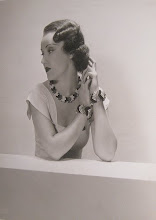
Suzy Vernon (1901 - 1997) was a popular leading lady in French and German films of the 1920’s and 1930’s. The French film star worked with some of her era's best directors.

Bookmark and Share

Erich von Stroheim


Erich von Stroheim, originally uploaded by Truus, Bob & Jan too!.
British postcard by Real Photograph, London, in the Picturegoer series, no. 20a. Photo: Fox.

Was Austrian-born Erich von Stroheim (1885 – 1957) a Hollywood movie star or a European film star? (Who cares!) As the sadistic, monocled Prussian officer in both American and French films, he became ‘The Man You Love to Hate’. But maybe he is best known as one of the greatest and influential directors of the silent era, known for his extravaganza and the uncompromising accuracy of detail in his monumental films.

Bookmark and Share

Jean Marais


Jean Marais, originally uploaded by Truus, Bob & Jan too!.
French postcard by Editions E.C., no. 3. Photo: Synops.

With his heroic physique, Jean Marais (1913 - 1998) was France’s answer to Errol Flynn, the epitome of the swashbuckling romantic hero of French cinema. The blonde and incredibly good-looking actor played over 100 roles in film and on television, and was also known as a director, writer, painter and sculptor. His mentor was the legendary poet and director Jean Cocteau, who was also his lover.

Bookmark and Share

Hazel Court was an English actress best known for her roles in horror films

Image Image Image
Image Image Image
Image Image Image
Image
Hazel Court (10 February 1926 – 15 April 2008) was an English actress best known for her roles in horror films during the 1950s and early 1960s. Court was born in Sutton Coldfield, Warwickshire, lived in the Boldmere area and attended Boldmere School and Highclare College. Her father was G.W. Court, a notable cricketer who played for Durham CCC. At the age of fourteen, she studied drama at the Birmingham Repertory Theatre and the Alexandra Theatre, also in Birmingham. At the age of sixteen Court met director Anthony Asquith in London, which won her a brief part in the 1944 film Champagne Charlie. Court won a British Critics Award for her role as a crippled girl in Carnival (1946). She also appeared in Holiday Camp (1947) and Bond Street (1948). Her first role in a fantasy film was in Ghost Ship (1952). One of Court's most remembered films is the cult classic Devil Girl from Mars (1954). Court wanted to act in comedy films

Bookmark and Share

Linda Darnell made her first film in 1939

Image Image Image
Image Image Image
Image Image Image
Image Image Image
Image Image Image
Image Image Image
Image Image Image
Image Image Image
Image Image Image
Image Image Image
Image Image Image
Image Image Image
Image Image Image
Image Image Image
Image
Linda Darnell (October 16, 1923 – April 10, 1965) was an American film actress. Darnell was a model as a child, and progressed to theater and film acting as an adolescent. At the encouragement of her mother, she made her first film in 1939, and appeared in supporting roles in big budget films for 20th Century Fox throughout the 1940s. She rose to fame with co-starring roles opposite Tyrone Power in adventure films and established a main character career after her role in Forever Amber (1947). Furthermore, she won critical acclaim for her work in Unfaithfully Yours (1948) and A Letter to Three Wives (1949). Notorious for her unstable personal life, Darnell was incapable of dealing with Hollywood, and landed in a downward spiral of alcoholism, unsuccessful marriages and highly publicized or scandalous affairs. She failed to receive recognition from the industry and its critics, and disappeared from the screen in the 1950s. Darnell died from burns sustained in a house fire

Bookmark and Share